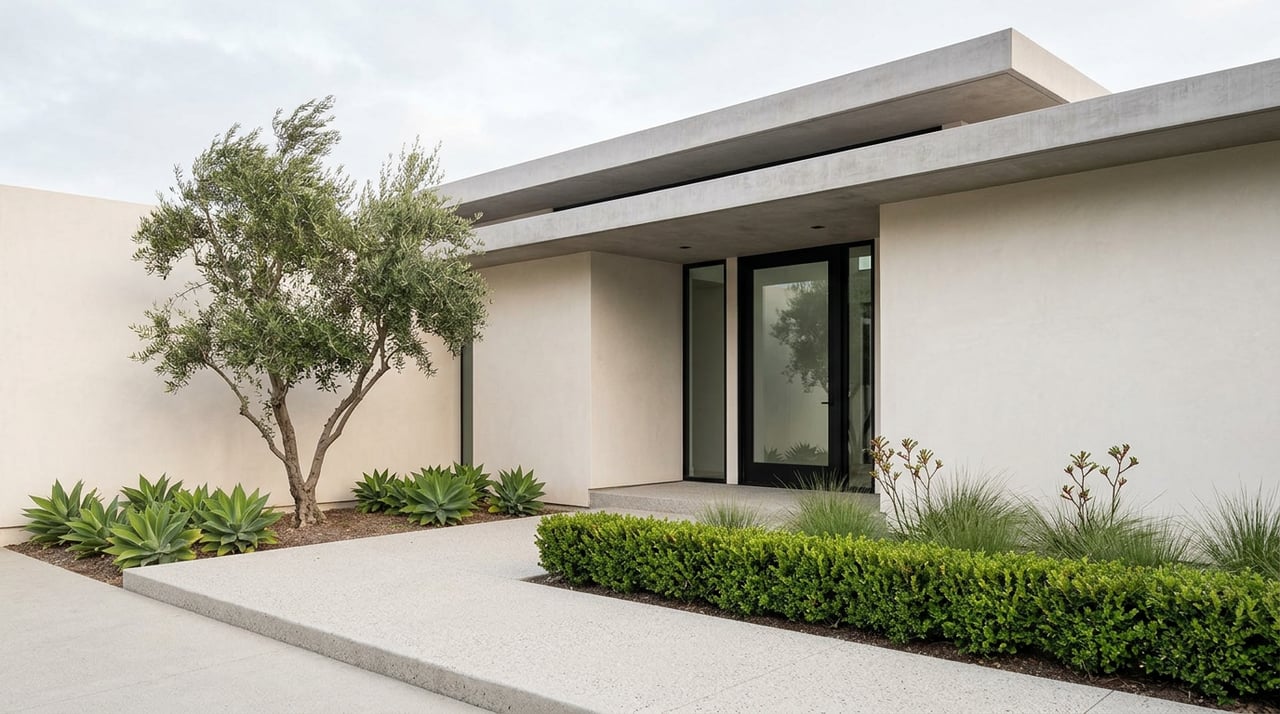
Ask most buyers touring Bungalow Heaven which houses qualify for a Mills Act property tax contract, and you'll get the same answer: the old ones. The 1905 Craftsman with the deep front porch, sure. The 1938 cottage that looks a little too clean-lined and modern for the neighborhood's reputation, probably not.
That answer would have been correct until mid-2025. It stopped being true on June 16, 2025, when the Pasadena City Council voted to extend Bungalow Heaven's official period of significance from the old "turn of the century through the 1930s" cutoff all the way to 1956. Sixty-seven homes that had been sitting outside the historic boundary, architecturally speaking, were reclassified as contributing structures in the same vote. Which means they became newly eligible for the same tax mechanism that's been quietly saving some of their neighbors money for decades, and most buyers touring the district still don't know it happened.
The line the city redrew
Bungalow Heaven has been Pasadena's first and oldest Landmark District since November 1989, built around roughly one square mile bounded by streets like Orange Grove Boulevard, Washington Boulevard, Lake Avenue, and Mentor and Chester avenues. For most of that history, the district's Conservation Plan treated its historic character as ending sometime in the 1930s. Anything built after that, even if it sat on the same block, wore the same roofline, and had been there for eighty years, fell outside the plan's definition of what counted.
The 2025 amendment changed the math. The period of significance now runs from 1885 through 1956, and it explicitly recognizes four design waves inside that window: Victorian homes from 1885 to 1906, Arts and Crafts houses from 1903 to 1923, Period Revival styles from 1915 to 1939, and the Minimal Traditional and Ranchette homes built between 1930 and 1956. That last category is the one worth sitting with. Those are the plain, low-slung houses that a lot of buyers walk past assuming they're the neighborhood's least interesting inventory. Under the new plan, some of them are now formally contributing structures, eligible for the same preservation contract as the Craftsman across the street.
Separate from that local reclassification, the National Park Service already lists 522 buildings inside the district as historically contributing to Bungalow Heaven's National Register listing. That's a different designation with its own history, and it's worth not confusing the two counts. The 67 newly added homes are additions to the city's own Conservation Plan, which is the list the Mills Act program actually checks against.
Why eligible doesn't mean discounted
Here's the part that trips people up next: eligibility and savings are not the same thing. Pasadena's own guidelines are blunt about this. The city reports that past Mills Act participants have seen property tax reductions averaging somewhere around 50 percent, with a documented range as wide as 20 to 75 percent, but it also states plainly that there's no guaranteed savings and that the assessed value gets reviewed annually.
The reason for that spread comes down to how the Los Angeles County Assessor calculates the number. Under a Mills Act contract, the California Board of Equalization explains that the assessor uses an income-based approach rather than sales data to determine the restricted value. But if you've owned a house for twenty years and you're still sitting on a low Proposition 13 base-year assessment from whenever you bought it, that Mills Act number might not beat what you're already paying. In some cases it can come in higher. The households who benefit most tend to be recent buyers or owners who just had a reassessment, which is exactly the position anyone purchasing a newly eligible home in Bungalow Heaven right now would be in.
That's the actual opportunity here, and it's specific: a buyer closing on one of the 67 newly reclassified homes is starting fresh on their assessed value anyway. Enrolling in the Mills Act at that point isn't competing against a decades-old low base year. It's competing against whatever the county would have assessed the home at on day one regardless.
What comes with the house, not just the discount
If you're evaluating a Mills Act property, or thinking about applying for one after you close, a few mechanics matter more than the headline savings number.
- The contract runs for an initial 10-year term and renews automatically every year after that, so it doesn't quietly expire. It has to be actively unwound if an owner wants out.
- It's recorded on title and transfers with the property. If you buy a house that already has a contract in place, you inherit both the tax benefit and the maintenance obligations that came with it.
- Breaching the agreement carries a real cost. The city's program guidelines say a cancellation fee can apply, which is not a consequence you want to discover after the fact.
- For higher-value properties, there's a valuation cap. A single-family home valued over $2.0 million that isn't a designated historic monument, a Greene and Greene work, or individually listed on the National Register needs a written statement explaining why an exception to that cap is warranted.
- Any exterior work that touches historic features generally needs a Certificate of Appropriateness before a permit is issued, and the city's own guidance estimates roughly two months for that review.
None of this is a reason to avoid a Mills Act property. It's a reason to read the contract before you write the offer, not after you've moved in. If a listing mentions Mills Act status, ask for the recorded agreement and the maintenance plan attached to it, the same way you'd ask for permit history on any older home. For a broader look at how Pasadena's architectural periods shape what buyers actually encounter house to house, our guide to architectural home styles Pasadena buyers should understand is worth a read alongside this one.
The tour that shows this is a working district, not a museum piece
The clearest sign that Bungalow Heaven treats its designation as something lived in rather than framed on a wall came this past spring. As Pasadena Now reported, on Sunday, April 26, 2026, the 35th Annual Bungalow Heaven Home Tour returned after a one-year pause. The Bungalow Heaven Neighborhood Association, the all-volunteer group that has run the tour since 1990, had made the call to sit out 2025 so its members could focus on fire relief work instead, including support for at least one renter inside the historic district itself who was displaced by toxic ash contamination.
That tour carried eight homes on a self-guided route with volunteer docents in each one, spanning the district's full architectural range from Victorian to Minimal Traditional. For the first time in the tour's history, proceeds went to a charitable partner outside the neighborhood: San Gabriel Valley Habitat for Humanity, the Monrovia-based affiliate leading rebuilding efforts in Altadena. It's a small detail, but it says something a Mills Act guideline document can't: this is a district where the neighbors who steward these houses are also the ones who showed up for the broader region's recovery.
Before you write the offer
If you're seriously considering a purchase in Bungalow Heaven, or evaluating whether an existing Mills Act contract is worth taking on, a short list of things to confirm before you sign anything:
- Ask whether the specific house was included in the 2025 Conservation Plan amendment as a newly contributing structure, or whether it was already contributing before the change.
- Request the recorded Mills Act contract if one exists, including the current maintenance plan and any past Certificate of Appropriateness filings.
- Compare the home's current assessed value against a rough Mills Act estimate before assuming savings. The county assessor's office can walk through this.
- Confirm the application cycle and any caps on new contracts for the current year, since the program runs on an annual timeline set by the city.
Getting a clear read on financing early matters just as much here as the historic paperwork does. Our step-by-step Pasadena homebuying timeline walks through where a pre-approval conversation fits before you start touring specific districts.
A few quick questions
Does Mills Act eligibility raise the asking price? The city's own guidance and local reporting note that historic designation can influence value, but results vary by property and there's no fixed formula. Treat it as one factor among several, not a set premium.
Do I have to enroll the day I close? No. Eligibility under the amended Conservation Plan doesn't expire, but the annual application cycle does have deadlines, so if you want the current tax year's benefit, timing matters.
What if the house was on the excluded list before the 2025 amendment? Check again. That's the entire point of this update. A house that didn't qualify under the old plan may qualify now, and a listing agent who hasn't kept up with the change might not mention it.
Does a Landmark District designation limit what I can do to the house? Bungalow Heaven's landmark FAQ says it adds a review step for visible exterior work, not a blanket restriction on ownership or use. Interior changes and most work not visible from the street are typically exempt.
If you're weighing a purchase in Bungalow Heaven, or anywhere else in Pasadena where a historic designation might be part of the picture, Waymon Hobdy can walk through both the real estate side and the financing side at once, so the Mills Act math and your loan numbers get worked out together instead of in two separate conversations. Let's Connect.
This article is general information, not legal, tax or financial advice. Consult a qualified professional about your situation.